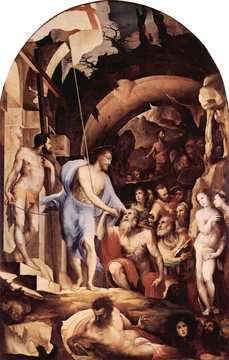
Childhood vs. Mortality
A small boy walks through a world built to kill him, and the game never tells you if he survives.

Childhood vs. Mortality is the central thematic axis of Limbo, the 2010 2D side-scrolling puzzle-platformer developed by the Danish studio Playdead. An unnamed, silent boy is thrust into a grayscale world of industrial wreckage, predatory insects, and lethal machinery, all while searching for his sister. The game never names the boy, never gives him a voice, and never explains why he is there—forcing the player to inhabit the experience of a small child confronting a world that is indifferent, vast, and frequently fatal.
The theme operates on two levels simultaneously: the literal gameplay loop of a tiny figure dodging saws, fire, and collapsing structures, and the metaphysical question of whether the boy is alive, dead, or suspended in a liminal state between the two. Playdead's deliberate refusal to provide dialogue, exposition, or a definitive ending means the tension between innocence and death is never resolved, only felt.
- Developer
- Playdead (Copenhagen, Denmark)
- Genre
- 2D side-scrolling puzzle-platformer
- Visual palette
- Grayscale (no color)
- Protagonist
- Unnamed, silent boy
- Objective
- Find his sister
- Dialogue
- None throughout the entire game
- Tone
- Dark, atmospheric, ambiguous
Lore & Background
The boy of Limbo is defined by his smallness. Every platform, every saw blade, every dripping pit of acid is scaled to dwarf him. He cannot talk, cannot fight, cannot reason aloud. He can only observe, climb, and die. This is the game's most sustained argument: childhood is a state of radical vulnerability in a world that operates on industrial, mechanical, and biological logic the child cannot parse. The traps do not target him; they simply exist, and his size makes them lethal. The forest, the factory, the insect nests—none of them were built for a child, and none of them will slow down for one.
The sister is the emotional anchor. She appears as a distant figure, a silhouette, a memory. She is the reason the boy keeps moving forward through a landscape that offers no reward, no score, no save point. Her presence implies a loss that preceded the game's first frame, and her eventual appearance in the ending—ambiguous, possibly a ghost, possibly a dream—suggests that the boy's entire journey may have been an act of grief rather than rescue. The mortality theme is not just about dying to a saw; it is about a child trying to hold onto someone who may already be gone.
Playdead has consistently resisted pinning down a single reading. The title itself—Limbo—evokes the medieval theological concept of a transitional space, a place between. The boy is between childhood and adulthood, between life and death, between memory and reality. The game's structure, in which death is instantaneous, consequence-free, and repeated dozens of times, mirrors the way a child's understanding of permanence is still forming. Each respawn is not a punishment; it is the next attempt to understand a world that will not explain itself.
In Their Own Story
The boy wakes on a root. No sky. No sun. Just the wet black of the forest floor and the smell of rot. He stands, and his shadow stretches long and thin behind him, the only other thing in the frame that looks like a person. He walks. A branch snaps under his foot. Somewhere ahead, a gear turns with a slow, grinding patience, and the air smells of iron. He does not know what the gear is for. He does not know why the forest is shaped like a factory. He only knows that the girl is somewhere past the next ridge, and that his hands are too small to grip the rusted ladder, and that if he falls, the mud will not care. He tries again. The mud does not care. He tries again.
Reader's Guide
In-game evidence: The boy is rendered at roughly one-sixth the height of the industrial structures he must navigate. He has no health bar, no inventory, no weapon. Death is a single touch—saw, spike, fire, insect sting—and the respawn is immediate, with no penalty. The sister is never spoken to, never held, never clearly seen until the final sequence. The entire game is grayscale, stripping away the color associations children use to categorize the world as safe or dangerous.
Dominant fan interpretations cluster around three readings: (1) the boy is dead and the entire game is a purgatorial dream; (2) the sister is a memory and the boy is processing grief; (3) the game is a literal allegory for a child's first encounters with a world that does not protect them. Playdead has encouraged all three, with the studio's public commentary consistently emphasizing that the game is an experience to be felt rather than a puzzle to be solved. They have declined to confirm or deny any specific reading.
The broader emotional arc moves from confusion (early forest levels) to mechanical dread (factory sequences) to a quiet, unresolved stillness (the ending). The childhood-vs-mortality tension never resolves because the game's argument is not that the child will grow up and be safe, but that the child must keep walking even when the world offers no guarantee of a safe place to arrive.
Did You Know?
- The boy has no name, no voice, and no dialogue in any of the game's languages; the entire narrative is conveyed through environment, animation, and the player's own interpretation.
- Every death in Limbo is instantaneous and consequence-free—there is no health system, no damage meter, and the player simply respawns at the last checkpoint, reinforcing the theme of a child's repeated, uncomprehending e
- The game's title references the medieval theological concept of Limbo, a transitional state between life and afterlife, which mirrors the boy's ambiguous status throughout the narrative.
- Playdead, the two-person Danish studio behind Limbo, later developed Inside (2016), which continues the same visual language and thematic concerns of a silent child navigating a hostile, ambiguous world.
More in Lore & Themes
Elsewhere in the Limbo universe
Spotted an error? Know more?
This is a living reference — every entry is fact-audited, and reader corrections feed straight into our audit queue. Suggest an edit · See this site's audit record